The OLAC validator runs off of an unit of software which has the heartbleed security vulnerability. Thinking about implementing a validator the following software comes to mind. https://github.com/zimeon/oaipmh-validator There was also an Online OAI-PMH validator from a former engineer on the Europeana project. I think he is based in Greece. His solution is not open source, but he mentioned that he would consider adding the OLAC profile. https://validator.oaipmh.com/
It would be good to see what other OAI-PMH validators look like and how submitters expect to interact with them.
In Jewish culture at the time it was commonly believed that someone who had a physical condition also had a spiritual condition. That is they were cursed. They were to be avoided. So how is it that this lame man has four friends?
I wonder if the friends were equally cursed socially? Did they have their own physical conditions? Is that how they met? Or was this a man who recently became lame and these were faithful friends from before the onset of the laming condition?
We met some of our friends on the mountain unexpectedly.
It was a great time on the mountain. A few great runs in. Lunch and a few more runs. I even tested out the Slalom course, a first for me. The weather was fickle and wet. By 3:30 out outer layers were wet and we called it a day.
Often as it is the case Katja falls asleep on the way home. So this day I again fell into my own thoughts. We passed a great many tress which had suffered fractures due to the recent ice storm. The greatest extent of the damaged trees was near Pleasant Hill. On the way up we counted among the trees 4 fallen telephone/power poles. The way back was different from the drive up in several ways. Among them there were now a number of backyard fire burning mounds of fallen branches. Evidently this practice was so well loved by those of Pleasant Hill and Springfiled that the whole valley from Dexter to Eugene was covered in a yellow haze caught below the ever dripping gray rain clouds. Breathability was noticeably affected and not for the better.
I passed one rather large burning pile and thought that it was rather odd that they didn’t cut it up for fire wood. That way at least the burning would have a purpose beyond clearing the field or yard area. At some point these trees ar seen a “excess” and rather than a limited commodity. Firewood is easy to come by. It’s cheap, maybe too cheap.
In a sense though isn’t the current situation with many of the fallen trees and limbs due to a lack of pruning? Granted we usually only have cold snaps like that once every 15 years or so in this part of the country. But when pruning isn’t done using it a similar perspective that the trees are really “excess”?
Another way that the drive differed was that on the way up Katja was reading Prince Caspian from the Chronicles of Narnia. While she knows the story well from audio books she definitely likes to read.
I asked her what one might learn from a book like Prince Caspian. To which she replied that there really isn’t much one can learn from fiction.
I said that I didn’t think that was true. In fact I thought that there was quite a bit one could learn through fiction. While it maybe not true facts or true events the kinds of decisions and scenarios one is exposed to through the narrative can influence us in indirect ways.
I asked her if she learned about morals at school. To which she replied “no”, to her recollection all discussion about right and wrong was about rules: school rules and classroom rules. Again I followed up with a question. I asked…what makes rules right or wrong? It’s about what we believe isn’t it?
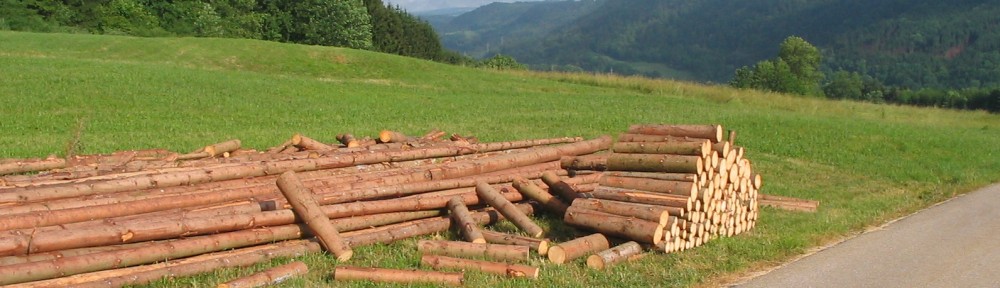
As woodworkers, we use a lot of resins, plastics, and other synthetic materials which get filed, ground, shaved, or sanded, along with wood and disposed of along with sawdust.
This means that woodworkers in their modern art context often contribute to the production and proliferation of microplastics. It also means that the “sawdust” isn’t 100% biodegradable.
What methods are there at the individual workshop level to filter it these plastics from biodegradable materials?
Some information professionals might be confused about the use of language identification metadata in larger bibliographic metadata standards. For example, VRA Core (Visual Resources Association)is a metadata standard which is used to describe visual artifacts. It is implemented in XML and therefore takes on all the descriptive power of XML. Including the use of the xml:lang attribute.
The following observations are made using the VRA (Visual Resources Association) Core 4 XML Schema, version 0.42. This schema implements the final VRA Core 4.0 guidelines, 2007-04-09. It is important to note that in these metadata standards implemented by memory institutions there are really two parts, the first is the "guidelines" and then there is the "implementation" of those guidelines (in this case as an XSD validation file). These two documents may not always be congruent even if that is the intention. In these cases I argue that what is valid is the technical implementation over the guidelines as that seems to be the best way to argue the definitive authority.
The XSD validation document contains the following annotation around the use of the xml:lang attribute.
VRA Core metadata attributes which can be applied to virtually any element. Note that xml:lang should contain ISO 639 language codes, not the English names of languages. Although the XML Schema defines xml:lang as allowing ISO 639-2 (three-letter) codes, some validators will only accept ISO 639-1 (two-letter) codes.
This annotation is misleading. First, the VRA Core authors are trying to alert catalogers and technologists that they need to not use the full text name value as might be done in other "library oriented standards", but rather they need to use language codes. In general this is a good thing. However, the VRA authors fail to understand the XML specification. Specifically, they indicate the need to use ISO 639 language codes. This is not true. XML needs to use BCP-47 language codes. This can be found in the specification for XML 1.0 fifth edition §2.12 https://www.w3.org/TR/xml/#sec-lang-tag. It is true that BCP-47 currently calls for the use of ISO 639 codes, but this might not always be true.
A second issue with the annotation is how the annotation distinguishes use between ISO 639-2 and ISO 639-1. If there are VRA Core data consumers or producers who are not consuming or producing valid XML then this is a transmission machinery issue not a protocol issue. BCP-47 does not call for the use of ISO 639-2/3 tas when there is an equivalent ISO 639-1 tag. If data ingest processes have only implemented ingest of ISO 639-1 then they haven't implemented VRA because VRA stands on XML which stands on BCP-47. BCP-47 is an algorithm which calls upon different standards at different times. Understanding the fall back nature of the algorithm would have clarified this point for VRA authors.
The following resources are useful for a better understanding of Language Tags in XML: